
If you're searching for reliable car insurance in your area, we offer competitive rates and comprehensive coverage options tailored to your location. Get a free quote and speak to one of our helpful Agents via phone, chat, or email if you have questions. We’re here to help.

What do car insurance companies cover in Canada?
In Canada, car insurance is different based on the province you live in. There are coverages you must have, and some that are optional that increase your level of protection. With online car insurance, you have control of your policy and the optional coverages you choose.
Looking for car insurance near you? Our secure online quoting platform helps you find personalized car insurance policies in your area, giving you the best protection for your budget. Sonnet offers auto insurance throughout many provinces and cities in Canada. Browse what’s covered in a few of the most popular areas we serve:
Auto insurance in Ontario | Auto insurance in Québec | Auto insurance in Toronto
Live somewhere else? Stay informed about province-specific legal requirements. Visit our all-in-one guide to learn more about mandatory and optional car insurance in your area.
Mandatory car insurance coverage
You must have liability coverage in order to drive. It protects you and other drivers financially in case of an accident where you’re at fault. Liability covers any damages, injuries or losses experienced by another driver or individual.
This coverage is required across Canada (except Newfoundland and Labrador). If you sustain any injuries or damages from an accident, this will cover your costs. In Québec, B.C., Manitoba and Saskatchewan, it’s included as part of your government car insurance plan. For the rest of Canada, these benefits are included in your policy through a private insurer.
This covers loss or damage to your vehicle and its contents caused by specific events. These events include an accident with another vehicle where you’re at fault or a collision with an object (like a guardrail or a tree). It also provides coverage if your car rolls over, or if your vehicle is subject to a hit and run and reported to police within 24 hours.
Although it’s optional, this coverage is considered essential. Without it, you’ll have to pay out of pocket to repair or replace your vehicle if these events happen. If you lease or finance your car, this coverage is usually required by your lessor or lender.
It’s not just when you’re driving that your vehicle could be damaged. This has your vehicle covered for damage from things like falling objects, vandalism, fire, theft, lightning, windstorm and earthquake.
Do you lease or finance your vehicle? Having both comprehensive and collision coverage may be required by your lender. Find out more about insuring a leased or financed car.
Optional car insurance coverage
Clean record for the last 6 years? We won’t increase your rate due to your first at-fault accident and we automatically apply this protection again if after another 6 years you’ve got a clean record.
Heads up! Accident Forgiveness applies to your first at-fault claim only. If you have another at-fault accident, your Accident Forgiveness will be removed from your policy. You’ll be rated for both accidents – and any at-fault accidents after that.
Protect that squeaky-clean history and your rate! When it comes time for renewal, your minor ticket won’t impact your rate. We’ll pretend like it didn’t even happen. (Unavailable in Québec and New Brunswick).
- Loss of Use Coverage. We’ll set you up with a rental car comparable to your own after a covered loss, while your car’s being repaired or replaced (up to your policy limits). Or, we’ll cover other regular travel costs – like taking a cab or the bus to work.
- Damage to Non-Owned Vehicle Coverage. We’ll cover you for the loss or damage to any borrowed or rented vehicle comparable to your own.
Heads up! This bundle is not available in Ontario. Our Enhanced Protection Bundle offers the best comparable coverage for Ontario drivers.
- Roadside Assistance. We’ll reimburse you for up to $50 for related emergency expenses.
- New/Used Vehicle Replacement. We’ll replace your vehicle without any adjustment for depreciation.
- Hit-and-Run Deductible Waiver. We’ll waive your deductible up to $1,000 in the event of a hit-and-run, as long as it’s reported within a reasonable time (like a day).
Ontario drivers get the benefits of four great coverages and savings to match, all in one convenient bundle.
Loss of Use Coverage
We’ll take care of your rental car costs after an at-fault collision or during a comprehensive claim. You’re covered for up to 30 days per occurrence for a rental car comparable to your own. This doesn’t cover loss or damage to a borrowed or rented vehicle.
Damage to Non-Owned Vehicle Coverage
We’ll cover you for the loss or damage to a borrowed or rented vehicle comparable to your own.
Roadside Assistance
We’ll reimburse you up to $50 for emergency expenses. This includes tow truck services, battery replacement, or installing a spare tire.
Hit and Run Deductible Waiver
We’ll waive your deductible up to $1,000 in the event of a hit-and-run if it’s reported to the police within 24 hours.
Buy auto insurance with Sonnet for top-rated coverage and service



Auto insurance: Frequently asked questions
Getting an auto insurance quote with Sonnet is quick and easy – with plenty of help along the way. Check out our blogs and frequently asked questions (FAQs) for helpful tips about car insurance.
Blogs
- On the Road
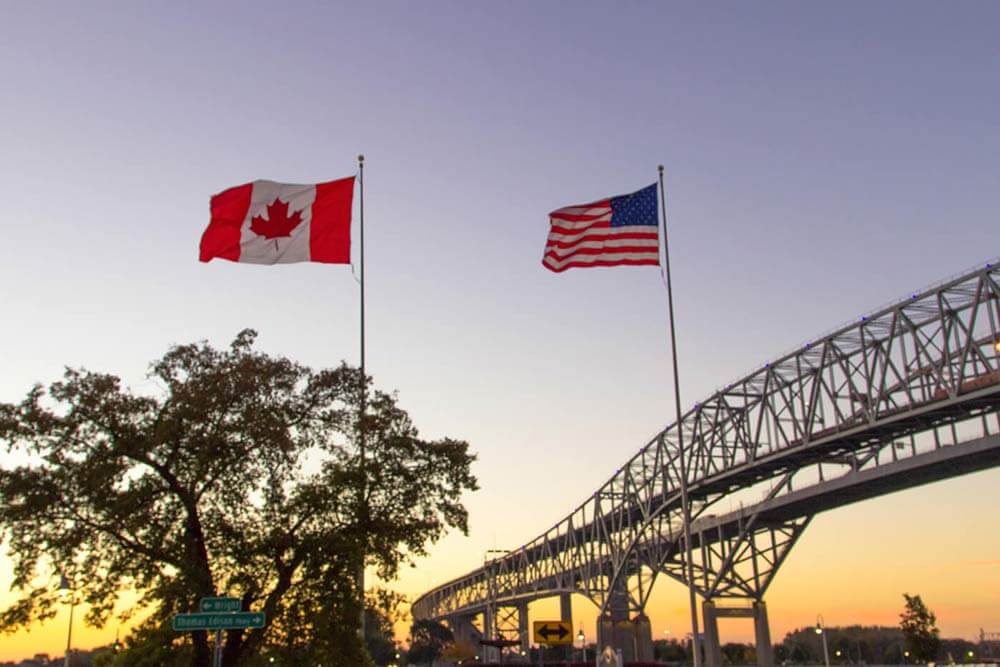
Tips for entering the U.S. from Canada by car | Sonnet Insurance
Driving across the Canadian border? Review your car insurance to ensure you’re covered. Here’s what you need to know for a worry-free trip.
- On the Road
Average Car Insurance Rates By Province Explained | Sonnet
Compare car insurance rates by province in Canada. See average premiums, coverage differences, and what you need to know to find the best rates.

- On the Road
How does usage-based car insurance track your driving?
Discover how usage-based insurance tracks your driving behaviour and influences your car insurance rates. Explore how it’s measured, how telematic data works, and more!
Frequently asked questions
Once you've purchased your car insurance, we’ll send you an email with a link to activate your Sonnet account. Your pink slip and proof of insurance will be accessible directly through your account dashboard. Here you can also get the steps to add your eSlip right to your phone’s digital wallet.
If you would like to download an eSlip, here are the steps to add it to your phone:
- Download the Sonnet Insurance app from the App Store (iOS) or Google Play store app (Android).
- Log in to your account in the app using the same email and password you set up for your Sonnet account.
- For first-time users, tap the ‘Get your eSlip’ banner over the ‘More’ tab. Agree to the terms and conditions for eSlips. Choose your vehicle (for single policies) or choose your policy then vehicle (for multiple polices).
- eSlips will automatically update in your digital wallet app after a policy change or renewal. If you notice that it hasn’t automatically updated, tap on the ‘More’ tab, then tap ‘Pink Slip’. Choose your vehicle (for single policies) or choose your policy then vehicle (for multiple polices).
- Your eSlip will automatically be added to your phone’s digital wallet.
Heads up! If you are an iOS (iPhone) user, the Background app refresh setting must always be turned ON. This setting allows eSlips to automatically update when you make a policy change or renew your policy.
Follow these steps to turn this setting ON:
- Go to your iPhone Settings and scroll down until you see the Sonnet Insurance App.
- Simply tap the Background App Refresh toggle, so it is ON (green).
Want to view your physical pink slip in your account? Follow these steps:
- Log in to your account and click on the ‘Easily access your digital pink slip’ card.
- For single policies click ’Download’. For multiple policies, choose your policy number and then click ‘Download’.
We’ll also send you a hard copy of your pink slip through the mail (which takes about 5 business days).
Haven’t received your liability slip in the mail? First, double check the mailing address listed on your account. You can do this by signing into your account and selecting Account. If your mailing address is incorrect or you would like to request a new pink slip be mailed, contact us.
When you purchase car insurance through Sonnet, you’re purchasing personal auto insurance. Our personal insurance policies don’t cover you when you use your vehicle for business or commercial purposes. This includes driving for rideshare companies like Lyft and Uber.
Important note: Some ridesharing services provide commercial insurance on your behalf when you drive for the company. Even with this insurance, driving for a rideshare company isn’t covered by Sonnet. Learn more about how to get coverage if you drive for Uber or Lyft.
Yes. In order to drive a car in Canada you are required by law to have insurance. Each province has its own minimum standard for mandatory vehicle insurance. Not sure what you need to have on your policy? Learn more about what each province requires.
TIP: Looking for auto insurance in Toronto? Review the basics of how car insurance works in Toronto.
Yes, you’ll still need to get car insurance for your leased or financed vehicle. It’s not included in your lease or contract.
The leasing or financing company may have specific car insurance requirements as a condition of your contract with them. These could include a minimum deductible for collision and comprehensive coverages. You’ll also need to list them on your policy as an additional interest, since they have a stake in your car. And, they’ll require you to provide them with proof of insurance.
Still have questions? Learn more about how leasing vs. financing a car affects your insurance.
Do you live in Toronto? Find out which has the cheapest car insurance - used cars vs. new cars.
Collision and comprehensive coverage work together to protect your car from many kinds of damage. When you have both, you’ll be covered for most types of damage. Plus, you won’t need to pay out-of-pocket to repair or replace your car.
Collision coverage protects your car when you’re at-fault in an accident, such as:
- Your car hits another car
- Your car hits an object (like a road sign or a street light)
- Your car rolls over
Heads up! For some not-at-fault accidents, like if you’re involved in a hit and run collision, you're still covered under your collision coverage.
Comprehensive coverage is a little different, because it protects your car from damage that’s caused from things other than an accident. This could be a rock hitting your windshield or a tree falling on your car during a storm. While comprehensive coverage can differ between insurers, here’s what it commonly covers you for:
- Your car is damaged by fire
- Your car is vandalized
- Your car is stolen
- Your car is damaged by a falling object
- Your car is damaged from a wind or hailstorm
Heads up! Although not mandatory coverage, if you lease your vehicle, both collision and comprehensive coverage are usually required by your leasing or financing company. Learn more about insuring your leased or financed vehicle.
Getting auto insurance in Canada is simple with Sonnet. Here’s how to do it:
- Start with a free online quote.
- Provide some basic info about yourself and your vehicle(s). This includes your VIN(s) and driver’s licence. We’ll also need to know about other drivers in your household so be sure to have their licence info close by, too.
- While you’re choosing your coverages, take time to learn about the types of car insurance. Some coverages are mandatory, and some aren’t. We’ll give you an overview of each one.
- Learn about add-on options. These include collision coverage, which covers damage to your own vehicle in a collision where you’re at fault. You might also want to add comprehensive coverage for incidents unrelated to a collision, like theft or certain natural disasters.
- Review your quote before you buy. Don’t worry, if you want to make certain changes to your policy over the course of your policy term, you can do so quickly and easily via your online account. Changes you can make on your own include adding a vehicle or driver.
- Done reviewing? The last step is to buy your auto insurance in just a few clicks! Then, set up your online account, download your documents (you have 24/7 access to them!), and hit the road knowing you’re protected.
Get started with a quote. Need help? Contact us via email, chat or phone for around-the-clock help. We’re here to answer your questions about coverage, billing, and more.
Limits and deductibles play a key role in how much you’ll pay for car insurance. Here's how they affect your costs when applying for auto insurance:
1. Insurance limits:
- Higher limits provide better coverage but your premium is likely to be higher.
- Lower limits may reduce your premium but could cost you more in the event of a major claim, since you’ll have less coverage.
2. Deductibles:
- Choosing a higher deductible usually leads to a lower premiums, but you’ll pay more in the event of a claim.
- Opting for a lower deductible often means a higher premiums, but you’ll pay less in the event of a claim.
When you’re choosing your limits and deductibles, consider your finances. How much could you afford to pay out of pocket if something happens? It's all about finding the right balance between an affordable premium and enough protection, so you don't drain your savings if the worst happens. At the end of the day, this is what will help you select the perfect option for your needs.
Need more help understanding limits and deductibles? Contact us so we can help you choose what’s best for you. We’re here to help.
At Sonnet, we want to make sure you have convenient transportation options while your car is being repaired – without the high rental fees. The good news is, our policies offer coverage that can help you get a rental car after an accident, whether you’re at fault or not. Here's what you need to know.
- If you’re at fault:
To qualify for a rental car comparable to your own, you'll need to have Loss of Use Coverage on your policy. Loss of Use is optional, and covers the cost of a rental vehicle while yours is being repaired or replaced after an at-fault accident. We can also help with other travel costs, such as taxis or public transit.
How do you get it? It's easy! Just add it to your policy when you’re getting your quote. - If you’re not at fault:
If you weren’t at fault, or were only partly at fault, you may still be eligible for a rental car. If you’re not at fault, a rental car will be covered by Direct Compensation Property Damage (DCPD) coverage. (This is called DCA in Québec.) Prefer to take a taxi or the bus? Some travel costs will also be covered if you need it.
NOTE: DCPD is only available in select provinces.
Sonnet also provides Uber vouchers in some instances to help you can get around after an accident.
We offer all-in-one packages that cover all your rental car needs. Learn more about our rental car package and coverage availability in the provinces we service.
Have questions about your quote? Our Insurance Agents will be happy to walk through it with you! Contact us via phone, email or chat. We’re here to help.

How to get cheaper car insurance
Finding budget-friendly car insurance close to home shouldn't be a hassle. Our secure online quoting platform simplifies the process, all while ensuring you get the best price for the coverage you need.
At Sonnet Insurance Company, we combine your unique information with a whole lot of math and analytics to build our best auto insurance price just for you. But we don’t stop there! Here are more easy ways you could save on your car insurance with us:
How do I get a car insurance quote?
We know adulting is hard. That’s why Sonnet’s made it simple to get an instant auto insurance quote.
Step 1: Enter your vehicle info and personal details. This includes things like the year, make, model, and VIN of your vehicle(s). It also includes stuff about you – like your driver’s licence, address and date of birth – and other drivers in your household.
Step 2: Add your discounts. Sign up for any savings you’re eligible for. We offer discounts on car insurance for Canadian university and college graduates, select employer groups, unions, associations, and more.
Step 3: Choose your policy type. Looking for regular car insurance? Go for our traditional package. Want to try our new usage-based insurance and save up to 35% for driving safely? Choose Sonnet Shift.
Step 4: Customize your coverage. Tailor your policy to suit your needs. Be sure to review your auto insurance coverages and deductibles to make sure you’re fully protected.
Step 5: Buy or save your quote. Purchase your new car insurance securely online. Need to think about it? Save your quote and we’ll email it to you. Your price will be saved for 45 days if the options you chose and info you provided don’t change.
If you have questions about car insurance coverage or just want to know more when you’re doing your quote, our licensed Insurance Agents are here to help. Contact us!
Get a free car insurance quote and buy online instantly
Finding affordable car insurance near you has never been easier. As Canada’s first online auto insurance provider, we offer fast, personalized quotes for drivers in Ontario, Québec, New Brunswick, Nova Scotia, and P.E.I.
Enter your details, customize your policy and buy online in just a few clicks. Get competitive rates and clear, easy-to-understand coverage designed to meet your needs. We’ve transformed the way Canadians buy car insurance, so you can worry less and live more.

Headline title goes here
Lorem Ipsum is simply dummy text of the printing and typesetting industry. Lorem Ipsum has been the industry's standard dummy text ever since the 1500s, when an unknown printer took a galley of type and scrambled it to make a type specimen book.
Here is an example of using a hyperlink in a body paragraph.
Column title 1
Column title 2
Headline title goes here



Headline title goes here
Lorem Ipsum is simply dummy text of the printing and typesetting industry. Lorem Ipsum has been the industry's standard dummy text ever since the 1500s, when an unknown printer took a galley of type and scrambled it to make a type specimen book.
Here is an example of using a hyperlink in a body paragraph.


Headline title goes here
Lorem Ipsum is simply dummy text of the printing and typesetting industry. Lorem Ipsum has been the industry's standard dummy text ever since the 1500s, when an unknown printer took a galley of type and scrambled it to make a type specimen book.
Step 1: Lorem Ipsum is simply dummy text of the printing and typesetting industry. Lorem Ipsum has been the industry's standard dummy text ever since the 1500s, when an unknown printer took a galley of type and scrambled it to make a type specimen book.
Step 2: Lorem Ipsum is simply dummy text of the printing and typesetting industry. Lorem Ipsum has been the industry's standard dummy text ever since the 1500s, when an unknown printer took a galley of type and scrambled it to make a type specimen book.
Step 3: Lorem Ipsum is simply dummy text of the printing and typesetting industry. Lorem Ipsum has been the industry's standard dummy text ever since the 1500s, when an unknown printer took a galley of type and scrambled it to make a type specimen book.
Step 4: Lorem Ipsum is simply dummy text of the printing and typesetting industry. Lorem Ipsum has been the industry's standard dummy text ever since the 1500s, when an unknown printer took a galley of type and scrambled it to make a type specimen book.
Step 5: Lorem Ipsum is simply dummy text of the printing and typesetting industry. Lorem Ipsum has been the industry's standard dummy text ever since the 1500s, when an unknown printer took a galley of type and scrambled it to make a type specimen book.
Lorem Ipsum is simply dummy text of the printing and typesetting industry. Lorem Ipsum has been the industry's standard dummy text ever since the 1500s, when an unknown printer took a galley of type and scrambled it to make a type specimen book.
Headline title goes here
Lorem Ipsum is simply dummy text of the printing and typesetting industry. Lorem Ipsum has been the industry's standard dummy text ever since the 1500s, when an unknown printer took a galley of type and scrambled it to make a type specimen book.
Here is an example of using a hyperlink in a body paragraph.
Blogs
- On the Road
Does Leasing or Financing Cars Impact Insurance? | Sonnet
Whether you lease or finance your car, it is important to understand how your vehicle is covered by insurance. Learn how leasing or financing impacts your policy.
- On the Road
Does Leasing or Financing Cars Impact Insurance? | Sonnet
Whether you lease or finance your car, it is important to understand how your vehicle is covered by insurance. Learn how leasing or financing impacts your policy.
- On the Road
Does Leasing or Financing Cars Impact Insurance? | Sonnet
Whether you lease or finance your car, it is important to understand how your vehicle is covered by insurance. Learn how leasing or financing impacts your policy.
FAQs
Yes. In order to drive a car in Canada you are required by law to have insurance. Each province has its own minimum standard for mandatory vehicle insurance. Not sure what you need to have on your policy? Learn more about what each province requires.
TIP: Looking for auto insurance in Toronto? Review the basics of how car insurance works in Toronto.
We consider a number of rating factors when we calculate your car insurance premium. These factors help us estimate how likely it is that you'll make a claim, and how much it could cost. Some are within your control, while others aren’t.
Here’s a breakdown of some of the key factors we look at to get your price:
- Your vehicle: Your car’s year, make, and model will impact your rate. Some cars are more likely to get stolen, and some are more expensive to repair.
- Your postal code: Where you live plays a big part in how much your car insurance costs. It’s usually pricier in urban areas, where there’s a higher risk of car theft and vandalism. Plus, busy roads mean it’s more likely you’ll get into an accident.
- How much you drive: All insurers ask how much you drive, and if you have a daily commute. That’s because the more kilometres you’re clocking, the higher the risk of an accident – and accidents can impact your premium.
- Your claims history: It pays to be a claims-free driver! Zero claims means a more affordable premium, but have an at-fault accident and you could see a rate hike.
- Your driving record: Generally, the better your driving record, the lower your premium will be. Both major and minor traffic convictions will hike up your car insurance rate (which is why it pays to drive safe).
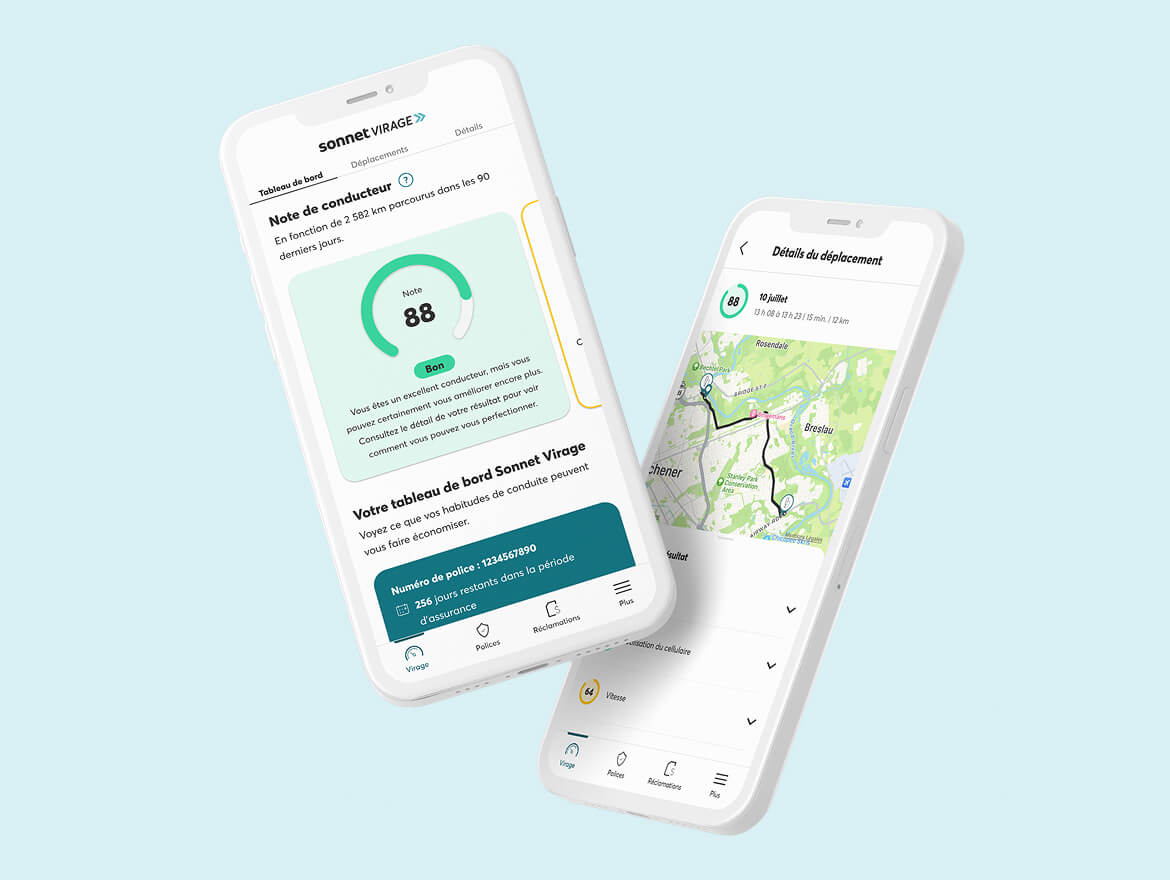
Did you know? Safe drivers can save big on car insurance with Sonnet Shift. Our easy-to-use app analyzes your driving and rewards you with discounts for making smart choices behind the wheel. Get a quote today to see if Shift is right for you!
- Your age: More driving experience usually means you’ve refined your safe driving skills – something every insurer likes to see. If you’re a younger driver you can expect to see higher premiums. Once you hit 30, you’ll generally see your rates take a dip – as long as you stay claims and conviction-free.
Other factors are simply out of your hands, including changes to government regulations, inflation, and the rising costs associated with injuries and car repairs.
Have questions about your policy? Contact us – we’re here to help.
During home insurance calculation, insurance companies look at a complex set of factors. These will determine the likelihood of you making a claim – and how much a claim could cost. The higher the likelihood is, the higher your premium will be.
Factors that can affect your home insurance premium include:
- Where your home is located
Based on your postal code, an insurer can find out how many claims are made in that area – and why they happen. For example, if your area has frequent windstorms, there could be more frequent claims for damage. This could cause your home premium to be higher than that of a house in an area that doesn’t have windstorms very often. - Home age and condition
The older the building, the higher the likelihood of a claim. That’s because things like old wiring (fuses, for example) are a bigger risk for fire. And, old plumbing increases your risk of claims due to sudden leaks or burst pipes. - Heating equipment
If your home is heated with oil (like it is in many rural areas), your premium could be higher. Oil tank leaks increase risk of damage and environmental hazards. Wood stoves are also a common source of house fires, so they could raise your payments, too. - Proximity to fire support
If your home is close to a fire station and fire hydrants – like in an urban area – your premium could be lower than a home in a rural location, where travel distance is longer. - Number of past claims
The longer you’ve been claims free, the lower your premium will be. If you’ve had a claim in the last year, you can expect your premium to go up at renewal. - Your age and other information about you
As you get older, your premium will tend to decrease. The fact is, many insurance providers consider homeowners with more experience as less risky to insure. Some insurers could also look at your credit score. - How you use your home
Do you rent out rooms or a basement unit in your house? Factors like this may also impact your premium since they can increase damage and liability risks.